
The most expensive cars in the world are so much more than transportation. These rolling art pieces encapsulate the priorities of the one percent, and in that universe, flamboyance and swagger take precedence over practicality and efficiency. Lifestyle criticisms aside, these are truly mind-boggling machines, and we’d like to count down our favorites for you here.
1. Zenvo ST1 ($1.2M)
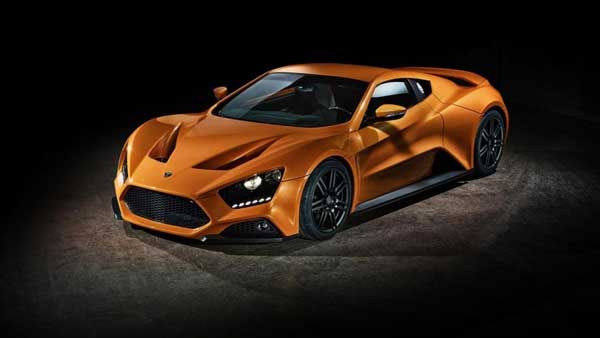
Kicking off our list is less of a car and more of an unchained animal in the ST1. Assembled in Zealand, Denmark, the Zenvo creates an absolutely obscene amount of power by combining a 6.8-liter V8 with both a supercharger and a turbocharger. Just how much is obscene exactly? How about 1,104 horsepower and 1,054 pound-feet of torque, all channeled to the car’s rear wheels.
2. Ferrari LaFerrari ($1.4M)
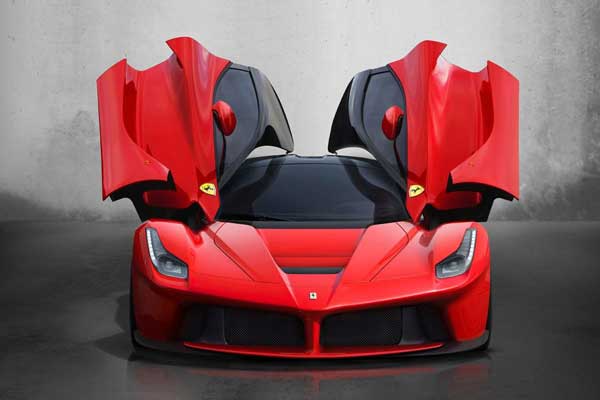
Few cars on the road are more striking, and even fewer accelerate faster. With a dry weight of less than 2,800 pounds, this dragon-like performance car accelerates from 0 to 60 mph in less than 3.0 seconds, and it’ll prance to 124 mph in under 7. Flat out, it’ll top 217 mph.
Nine conceptual design studies were considered for the V12 hybrid flagship in 2011, reduced to five in April 2011 (three by Ferrari Centro Stile and two by Pininfarina). Of these, two full-size concepts were built: LaFerrari Concept Manta (internal designation: 2011 Model 2) and LaFerrari Concept Tensostruttura (internal designation 2011 Model 3). These were unveiled at the Ferrari Museum in Maranello, Italy and Ferrari World in Dubai. The final design of the LaFerrari is similar to the Manta concept (Model 2).
3. Pagani Huayra ($1.4M)
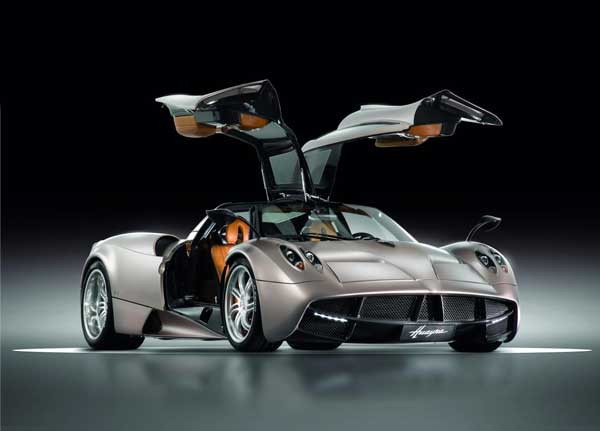
The Huayra is equally as famous for its odd-sounding name as it is for its face-melting performance. Named after the Incan God of Winds, the Huayra (pronounced why-rah) boasts an AMG-sourced 6.0-liter V12 with two turbochargers, resulting in 620 hp and and a massive 740 lb-ft.
With its shapely fenders and sprawling rear wing, the Huayra looks like it was built to conquer the racetrack. And much like a race car, it’s constructed with an eye on minimizing curb weight. It’s made from materials such as carbon-titanium HP62, a substance that’s lighter and stronger than standard carbon fiber. The current Huayra is scheduled to be the last of the line. Still, that may change, since Pagani has a history of acquiescing to the requests of private collectors seeking a one-off or limited-edition model. With only 40 production models planned, the Huayra is rare and magnificent.

